


Welcome to the world of case studies, where you get to showcase your ability to solve problems for your ideal market. But before you jump into writing, let’s equip you with all the knowledge you need to create a masterpiece that not only impresses but also ranks high in the realm of search engines. It’s time to get noticed and reel in those dream clients!
What is a case study?
A case study is a versatile and essential tool used by businesses to tell success stories, prove their worth, and charm potential clients.
At its core, a case study puts a spotlight on your accomplishments and expertise. It’s a living testament to your skills and capabilities, showcasing real-world examples of how you’ve overcome challenges and achieved remarkable results. This isn’t just a piece of content; it’s your victory lap, your trophy cabinet, and your stage to shine on.
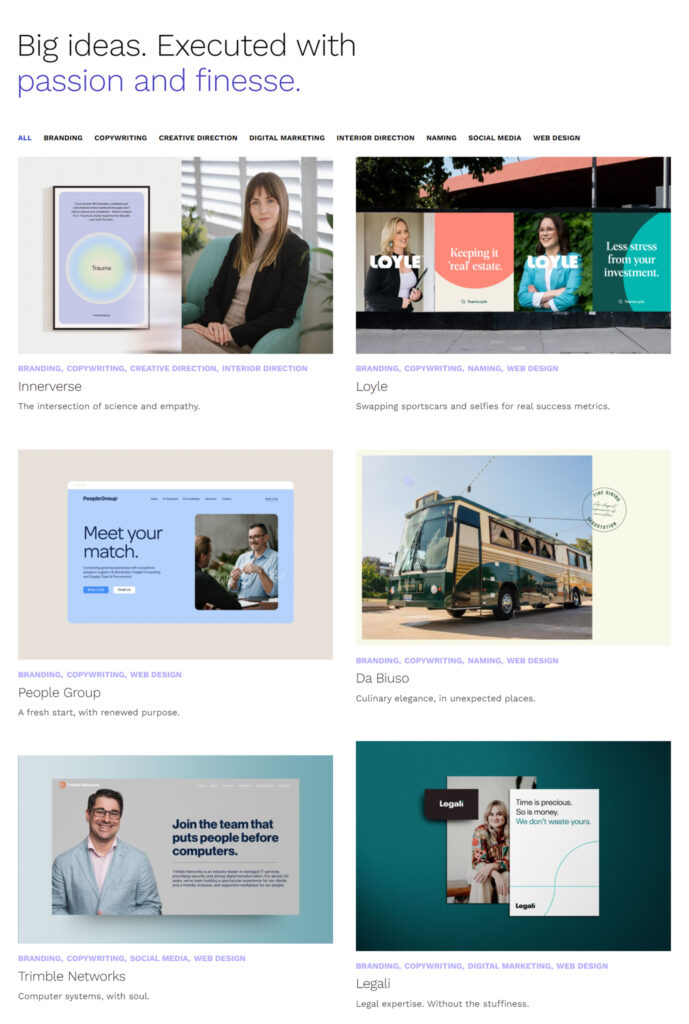
Take a look for yourself. Check out our case studies here.
Why are case studies so important?
A killer case study is proof you’re not all talk. It’s where your talents take centre stage, attracting not just any clients, but the right ones. It’s like a beacon, calling to those who see your value and need exactly what you’ve got to offer.
When clients read your case study, they’re peeking into your world, seeing if you’re the missing puzzle piece they’ve been searching for. Your case studies are strategic assets that:
- Showcase your capabilities through real-life successes.
- Bolster your credibility and trustworthiness.
- Serve as a magnet for your ideal clients, leading them right to you.
In the world of business, where trust and credibility are paramount, a well-crafted case study can be your golden ticket to attracting and retaining the clients who truly value what you bring to the table.
Choosing the right project for your case study.
Picking the right project is where the magic starts. Not every project is spotlight-worthy. Select ones that align with your goals and dazzle your target audience. Here’s how to pick a winner:
1. Identify success stories.
Look for projects where you delivered exceptional results. Where your team’s expertise, creativity, and dedication led to outstanding outcomes. These could be projects where you:
- Achieved significant growth or improvement for a client.
- Overcame particularly challenging obstacles.
- Introduced innovative solutions
- Received glowing client feedback or testimonials from the client.
2. Align with your target audience.
Pick stories that resonate with your dream clients. Think about the industries, sectors, or niches they exist in and they problems they commonly face. Then show off your successes in areas they care about. By demonstrating past success in their domain, you’re more likely to capture their attention.
3. Diverse range of services.
If you offer a diverse range of services or solutions, highlight all of them. Your case studies should reflect your versatility. For example, the Creative team at LINK provide branding, copywriting and web design services. It would do us a disservice if every case study we presented focused solely on brand design, because it doesn’t reflect all that we can do.
4. Show progress over time.
Share stories of growth, of long-term victories that highlight your commitment and problem-solving ability. This shows potential clients how you’ve consistently delivered value. Showcase the journey from the initial challenge to the final, impressive results.
5. Seek client permission.
Always seek permission from your clients before featuring their projects in case studies. Some clients may have confidentiality concerns or may prefer not to be in the spotlight. Respect their wishes and privacy, and if necessary, offer to anonymise or generalise the details of the project to protect sensitive information.
6. Quantify results.
Whenever possible, let hard data do the talking. Concrete results make your case studies irresistible. Whether it’s revenue growth, cost savings, increased website traffic, or other measurable outcomes, data adds credibility and impact to your case study. It shows potential clients that your claims are backed by tangible evidence.
7. Consider the unconventional.
Don’t shy away from unconventional or unexpected success stories. They can demonstrate your ability to think outside the box and find creative solutions.
By showcasing your best work and the stories that resonate most with potential clients, you’ll create case studies that not only impress but attract the right clients to your business. Remember, it’s not just about telling a story; it’s about telling the right story.
Structuring your case study.
Effective structure turns a plain old story into a page-turner. For instance, when describing the challenge, think of it as setting the stage for an epic battle—your client versus their problem, with you as the hero.
Introduction.
Kick off with a bang. Your case study’s introduction is the first impression you make on your readers. It’s the moment you grab their attention and set the stage for an engaging narrative. The opening scene of a blockbuster movie—a teaser that leaves your audience eager for more.
Effective case study introductions are concise but powerful, offering a glimpse into the journey that’s about to unfold and providing context for the rest of your story.
In the example below, we’ve created intrigue and curiosity by hinting at what’s about to unfold.
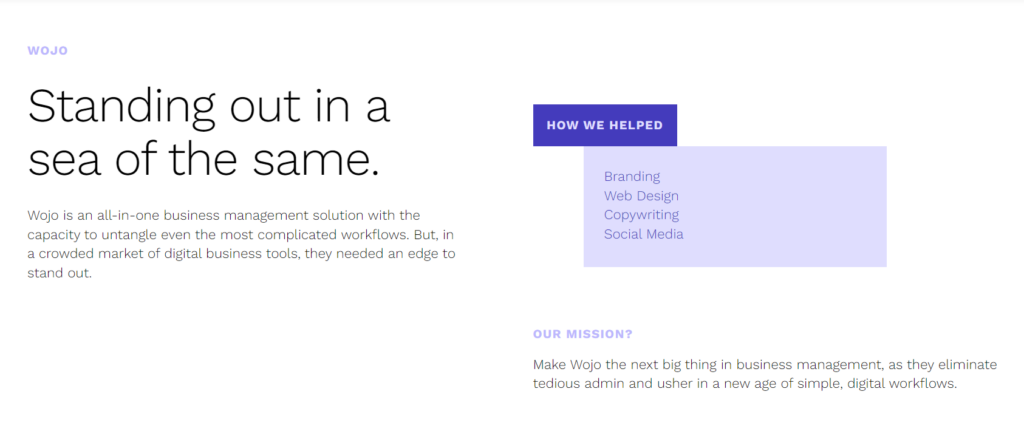
LINK Creative Case Study: Wojo
The challenge.
Once you’ve piqued your readers’ interest, it’s time to introduce the challenge your client faced. Lay out the problem in detail, providing context and helping your audience understand the gravity of the situation. Consider this the rising action of your story—the moment when the conflict is revealed.
In the example below, we’ve painted a clear picture of the obstacles our client was up against. By using specific details to illustrate the challenges they faced, we help our audience empathise with the client while establishing the need for a solution.
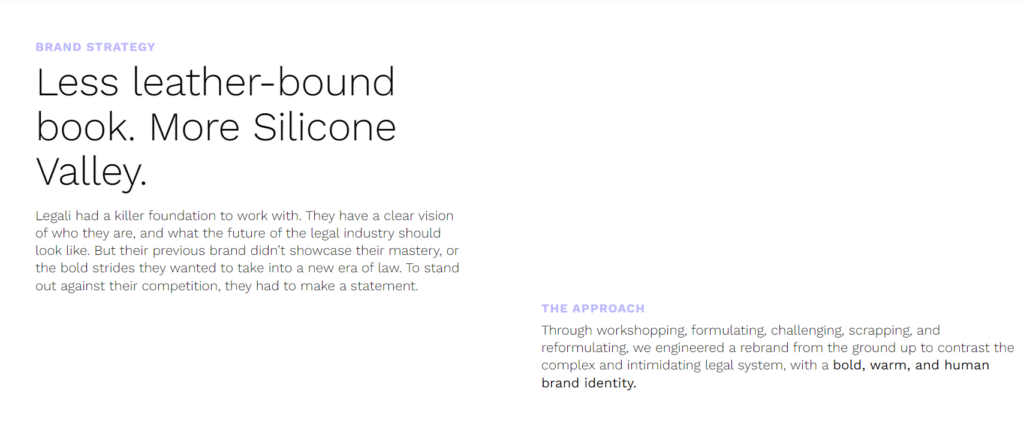
LINK Creative Case Study: Legali
The solution.
Now, it’s time for your heroic entrance. Describe how your expertise and services came to the rescue. This is the climax of your story. Take your readers behind the scenes, giving them a glimpse of your process and the meticulous care you put into your work.
Don’t be afraid to delve into the details, as long as it remains engaging and relevant. This is your opportunity to demonstrate your value and why you’re the go-to expert in your field.
Showing the reader how much effort goes into what you do is a great way to make prospects more comfortable with higher fees. Because when they understand what they’re paying for, they’re more willing to pay it.
In the example below, we’ve showcased our expertise and the immense amount of thought we put into our approach by explaining the reasoning behind every decision we made throughout the process.
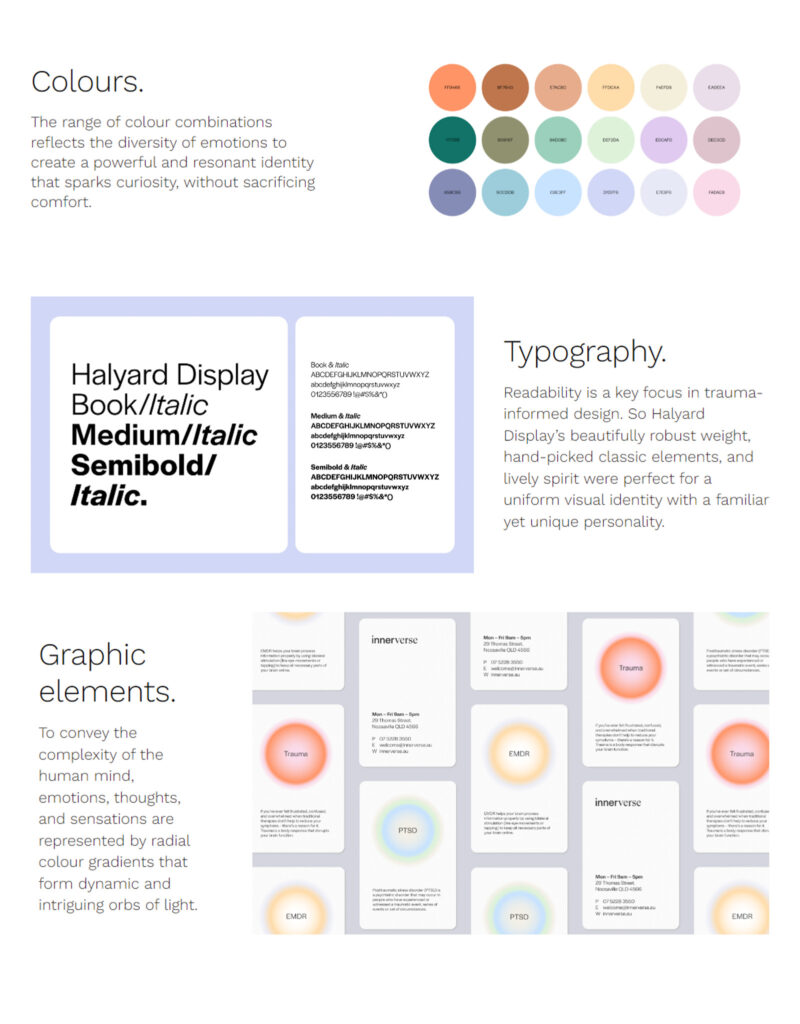
LINK Creative Case Study: Innerverse
The results.
After the heroics, it’s time to reveal the rewards. Showcase positive outcomes and use data to substantiate your claims. This is the moment of triumph—the resolution of your story.
In this section, you’re quantifying success. Where you can, use specific metrics and statistics to add credibility to your case study. It’s not just about claiming victory; it’s about proving it with tangible results.
And if your client is willing to provide a written testimonial (or better yet, a video testimonial), don’t let that opportunity pass you by. If they were happy with your service, chances are people like them will be too. So let them shout it from the rooftops.
In the example below, we used real statistics from our clients Google Analytics dashboard to add credibility to our claims of success.
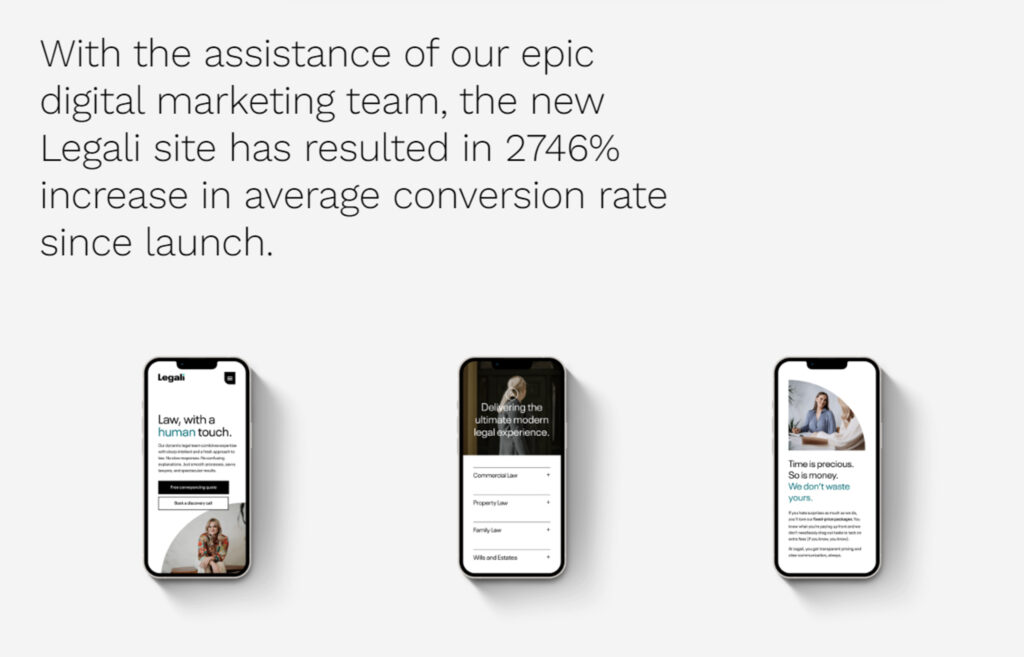
LINK Creative Case Study: Legali
In the next example, we’ve used a testimonial provided by our client to back up our claims that they were thrilled with the end result.

LINK Creative Case Study: People Group
Remember, while structure is vital, storytelling should not be overlooked. Weave these elements together with a bit of flair, keeping your readers engaged and eager to reach the conclusion of your case study.
Now, let’s talk about the art of writing a case study that keeps your readers glued to their screens.
Here are some tips:
Hook the reader with captivating headings.
Your case study’s headline is the first thing your readers see, so it needs to be a showstopper. Craft headlines that not only describe the essence of the case study but also pique curiosity. Use powerful and action-oriented words to draw readers in. Try to include the general gist of your body copy in the headline too, as a lot of people will only skim your headlines.
For example: “From Struggling to Thriving: How Branding Transformed XYZ Tech.”
In this headline, we’ve created a compelling narrative arc from struggle to success, provided context, and instantly grabbed the readers’ attention by making them curious about the transformation.
Use persuasive language.
Throughout your case study, highlight the benefits of your solution and the positive impact it had on your client. Appeal to the reader’s emotions and desires, making them feel like your services are the answer they’ve been searching for.
For example: “Witness the incredible transformation as we turned XYZ Tech’s dated image and declining customer engagement into a vibrant, modern brand that increased customer loyalty and market share.”
Here, you’re not just stating facts; you’re creating an emotional connection by using words like “incredible transformation” and painting a picture of what you can do for people just like this customer.
Craft an engaging narrative.
How excited are you when a bland report has crosses your desk. Do you want to read it? Us either. So kick the boring to the curb. A case study is a story waiting to be told. Craft a narrative that takes your readers on a journey. Begin with an intriguing setup, introducing the characters (your client), their challenges, and the quest for a solution.
Example: “Picture this: You’re a promising start-up on the brink of greatness, but you’re stuck. You just can’t seem to get ahead. And you don’t know what’s missing.”
In this introduction, you’re inviting your readers to step into the shoes of your client, immersing them in the story from the very beginning and adding an air of mystery.
Make your reader part of the story.
Engage your readers by making them feel like active participants in the narrative. Write the case study in conversational language, so they feel like you’re telling them the story directly. When your writing flows like a natural conversation, it does two things:
- It makes the reader feel like you’re speaking only to them.
- It’s easier for them to process the information, because they do it the same way everyday in conversation. We call this “reducing the cognitive load”.
Data is King.
While storytelling is crucial, the backbone of your case study is hard-hitting data and statistics. Use specific numbers to back up your claims and demonstrate the tangible impact of your solution.
Example: “Our strategy increased website traffic from 1,000 to 4,000 monthly visitors, resulting in a 300% boost.”
Words and stories are great, but they can’t do all the heavy lifting. Here, you’re providing concrete evidence of your success, making your case study even more credible and persuasive.
Don’t forget to add visual appeal.
Visual elements aren’t an option. They’re a necessity. Visuals, such as images, infographics, and videos, break up text and make your case study more digestible. They provide visual proof of your claims and enhance the overall reader experience.
Where it makes sense for your business, including before-and-after visuals to visually demonstrate the impact of your solution is a game-changer. This means your prospects don’t have to imagine the transformation – you’ve put it right in front of their eyes.

LINK Creative Case Study: Legali
Incorporating these tips into your case study writing process will help you craft a narrative that not only informs but captivates your audience. Engaging headlines, persuasive language, storytelling techniques, concrete data, and visual appeal all work together to keep your readers eager to uncover the entire story.
Promoting your case study.
Congratulations, you’ve written a stellar case study! Now, it’s time to make some noise and get it in front of the right eyes. Here’s how:
- Share your case study on your social media platforms.
- Send it to your email list, and watch those clicks roll in.
- Don’t forget to feature your best case studies prominently on your website. And create a dedicated “Case Studies” section where potential clients can easily access all of your success stories.
- Optimise your case study for search engines by including your chosen keywords. Incorporate your primary keyword naturally throughout the case study, ensuring it fits seamlessly within the content.
- Reach out to potential clients and industry publications, and share your masterpiece.
And there you have it. Everything you need to know about creating case studies that reel in those ideal clients.
If you’d like to chat about taking your brand to the next level, we’re here to help.
Book a free, no-obligation chat with our Creative Lead to see if we’re the right team to help you design a smashing logo and build a brand that skyrockets you into your next phase of growth.